
Blog on RFID Technology and IoT Solutions
Blog Home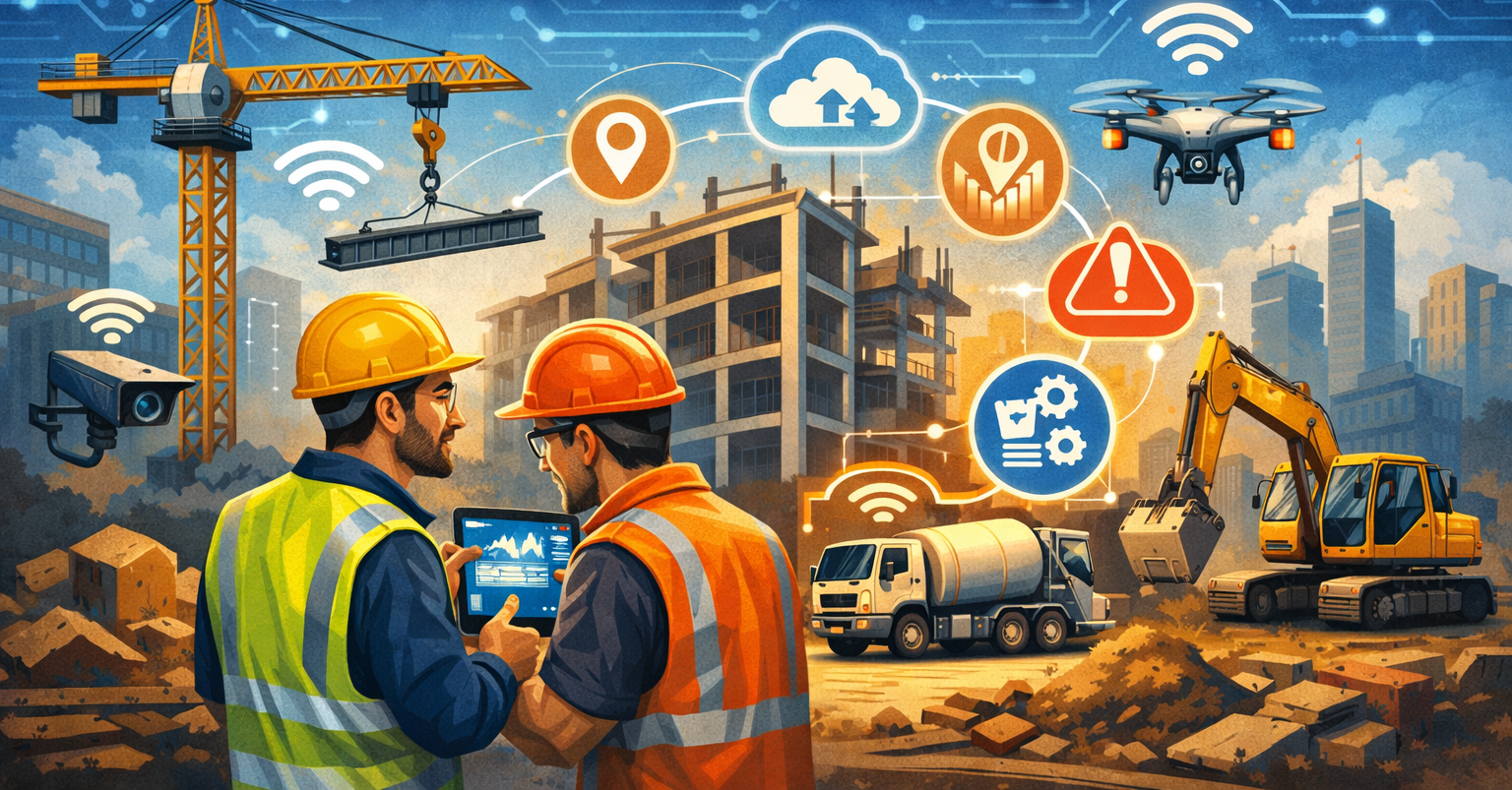
IoT in Construction: Use Cases, Benefits, and Challenges
07 February 2026Introduction
The construction industry has traditionally been slow to adopt digital technologies, but this is rapidly changing. One of the most transformative technologies driving this change is the Internet of Things (IoT). By connecting equipment, materials, workers, and sites through sensors and smart devices, IoT is helping construction companies improve efficiency, safety, cost control, and decision-making.
In this blog, we explore what IoT means for construction, its key use cases, the benefits it delivers, and the challenges companies must overcome to successfully implement it.
What is IoT in Construction?
IoT in construction refers to a network of connected devices—such as sensors, wearables, machines, and software platforms—that collect and exchange data in real time. These devices monitor everything from equipment performance and material usage to worker safety and environmental conditions, enabling data-driven insights and automation across construction projects.
Key Use Cases of IoT in Construction
1. Smart Equipment and Fleet Management
IoT-enabled sensors installed on heavy machinery such as excavators, cranes, and bulldozers provide real-time data on location, fuel consumption, engine health, and usage hours.
Examples:
- Predictive maintenance alerts to prevent equipment breakdowns
- Tracking idle time to reduce fuel waste
- Optimizing equipment allocation across sites
2. Predictive Maintenance
Instead of relying on scheduled maintenance or reacting to failures, IoT enables predictive maintenance. Sensors detect anomalies like overheating, vibration, or pressure changes and trigger alerts before a breakdown occurs.
Impact:
- Reduced downtime
- Longer equipment lifespan
- Lower repair and replacement costs
3. Worker Safety and Wearables
Wearable IoT devices such as smart helmets, vests, and wristbands monitor worker health and safety conditions.
Use cases include:
- Detecting falls or accidents
- Monitoring heart rate and fatigue levels
- Alerting workers to hazardous zones
- Tracking worker location during emergencies
4. Site Monitoring and Security
IoT-powered cameras, motion sensors, and drones help monitor construction sites remotely.
Benefits:
- Preventing theft and unauthorized access
- Monitoring progress in real time
- Improving site security during off-hours
5. Smart Materials and Inventory Management
RFID tags and IoT sensors track construction materials from suppliers to on-site usage.
Applications:
- Preventing material loss or theft
- Reducing over-ordering
- Ensuring materials are available when needed
6. Environmental Monitoring
IoT sensors monitor environmental conditions such as temperature, humidity, noise, dust, and air quality.
Why it matters:
- Ensuring regulatory compliance
- Protecting worker health
- Improving concrete curing and material performance
7. Project Progress Tracking
IoT devices integrated with Building Information Modeling (BIM) systems provide real-time updates on project status.
Results:
- Accurate progress reports
- Early detection of delays
- Improved coordination between teams
Benefits of IoT in Construction
1. Improved Productivity
Real-time data helps managers make faster and more informed decisions, reducing delays and inefficiencies.
2. Enhanced Safety
Continuous monitoring of workers and sites significantly reduces accidents and improves compliance with safety standards.
3. Cost Reduction
IoT minimizes equipment downtime, material waste, and rework—leading to substantial cost savings.
4. Better Decision-Making
Data collected from IoT devices provides actionable insights for planning, scheduling, and risk management.
5. Increased Transparency
Stakeholders gain visibility into project progress, budgets, and performance through real-time dashboards.
6. Sustainability
Optimized resource usage and reduced waste contribute to more environmentally friendly construction practices.
Challenges of Implementing IoT in Construction
1. High Initial Investment
IoT devices, infrastructure, and software platforms require significant upfront costs, which can be a barrier for small and mid-sized firms.
2. Data Security and Privacy
Connected devices increase the risk of cyberattacks and data breaches. Protecting sensitive project and worker data is a major concern.
3. Integration with Legacy Systems
Many construction companies still use outdated systems that may not integrate easily with modern IoT platforms.
4. Connectivity Issues
Construction sites are often located in remote areas with limited internet connectivity, affecting real-time data transmission.
5. Data Overload
IoT generates massive amounts of data. Without proper analytics and data management strategies, valuable insights can be lost.
6. Skill Gap and Adoption Resistance
Workers and managers may lack the technical skills required to use IoT solutions effectively, leading to resistance to change.
Best Practices for Successful IoT Adoption
- Start with pilot projects before full-scale deployment
- Focus on high-impact use cases such as safety and equipment monitoring
- Invest in cybersecurity measures
- Train employees and encourage digital adoption
- Choose scalable and interoperable IoT platforms
Future of IoT in Construction
The future of construction will be increasingly connected. With advancements in AI, 5G, and digital twins, IoT will play a central role in creating smart, autonomous, and highly efficient construction sites. Companies that embrace IoT today will gain a strong competitive advantage in the years to come.
Conclusion
IoT is reshaping the construction industry by improving safety, efficiency, and cost control. While challenges such as security, integration, and investment remain, the long-term benefits far outweigh the risks. By adopting IoT strategically, construction companies can build smarter, safer, and more sustainable projects
- Intellistride.com
- Blog
- IoT in Construction: Use Cases, Benefits, and Challenges