
Blog on RFID Technology and IoT Solutions
Blog Home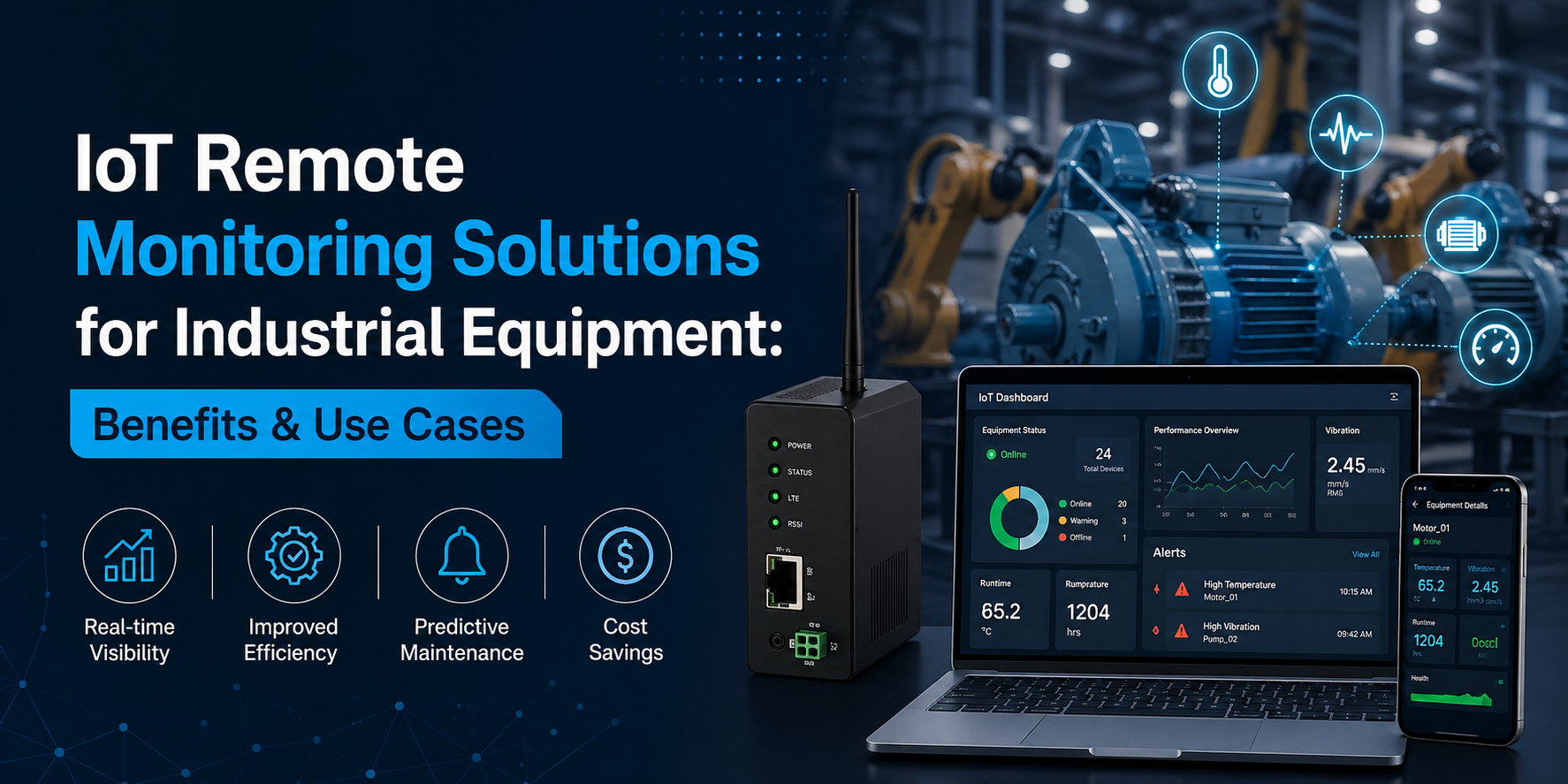
IoT Remote Monitoring Solutions for Industrial Equipment: Benefits & Use Cases
27 April 2026Introduction
Industrial operations are becoming increasingly complex, with equipment often distributed across multiple locations, environments, and even countries. In such a landscape, relying on manual monitoring or periodic inspections is no longer sufficient. Businesses need real-time insights, instant alerts, and predictive capabilities to stay competitive.
This is where IoT Remote Monitoring Solutions are making a transformative impact. By connecting industrial equipment to intelligent systems, organizations can monitor performance, detect issues early, and optimize operations—all without being physically present.
What Are IoT Remote Monitoring Solutions?
IoT remote monitoring solutions use connected sensors, communication networks, and cloud-based platforms to track and manage industrial equipment from anywhere in the world.
These systems continuously collect and transmit data such as:
- Temperature
- Pressure
- Vibration
- Energy consumption
- Operational status
The data is then analysed and displayed through dashboards, enabling operators to make quick and informed decisions.
How IoT Remote Monitoring Works
The process typically follows these steps:
1. Data Collection
Sensors attached to equipment capture real-time operational data.
2. Data Transmission
The data is transmitted via secure networks such as Wi-Fi, cellular, or LPWAN.
3. Data Processing
Cloud or edge computing systems analyse the incoming data.
4. Insights and Alerts
Actionable insights, alerts, and reports are generated for operators and managers.
Key Benefits of IoT Remote Monitoring
1. Real-Time Equipment Visibility
IoT solutions provide 24/7 visibility into equipment performance, regardless of location.
- Monitor multiple machines simultaneously
- Access live dashboards remotely
- Eliminate reliance on manual checks
2. Reduced Downtime
Unplanned downtime can disrupt operations and lead to significant losses. IoT helps by:
- Detecting anomalies early
- Sending instant alerts
- Enabling quick corrective actions
This ensures continuous operations and improved productivity.
3. Predictive Maintenance
One of the most powerful advantages of IoT is predictive maintenance.
- Analyse historical and real-time data
- Predict equipment failures before they occur
- Schedule maintenance proactively
This reduces repair costs and extends equipment lifespan.
4. Cost Optimization
IoT remote monitoring helps reduce operational costs by:
- Minimizing unnecessary maintenance
- Reducing energy consumption
- Preventing costly breakdowns
5. Improved Safety
Industrial environments can be hazardous. IoT enhances safety by:
- Monitoring critical conditions (e.g., overheating, pressure levels)
- Sending alerts for unsafe situations
- Reducing the need for manual inspections in risky areas
6. Remote Access and Control
Operators can manage equipment from anywhere:
- Access systems via mobile or desktop
- Perform remote diagnostics
- Control operations without being on-site
This is especially beneficial for global or multi-site operations.
7. Data-Driven Decision Making
IoT platforms provide valuable insights that help organizations:
- Identify inefficiencies
- Optimize workflows
- Improve long-term planning
Practical Use Cases Across Industries
1. Manufacturing Plants
- Monitor machinery performance in real time
- Detect production bottlenecks
- Optimize output and efficiency
2. Oil and Gas Industry
- Monitor pipelines and drilling equipment remotely
- Detect leaks or pressure changes instantly
- Improve safety and compliance
3. Energy and Utilities
- Track performance of power plants and grids
- Predict equipment failures
- Optimize energy distribution
4. Agriculture
- Monitor irrigation systems and equipment
- Track environmental conditions
- Improve crop yield and resource usage
5. Logistics and Transportation
- Monitor fleet health and performance
- Track fuel consumption
- Optimize routes and reduce delays
6. Smart Buildings and Facilities
- Monitor HVAC systems and energy usage
- Detect system faults early
- Improve building efficiency
Challenges to Consider
Despite its advantages, implementing IoT remote monitoring comes with challenges:
- Data Security Risks: Protecting systems from cyber threats
- Integration Issues: Connecting with existing legacy systems
- Scalability Concerns: Managing large volumes of data
- Initial Investment: Upfront costs for hardware and software
However, with the right strategy and technology partner, these challenges can be effectively addressed.
Future Trends in IoT Remote Monitoring
The future of IoT monitoring is evolving rapidly with innovations such as:
- AI and Machine Learning: Advanced predictive analytics
- Edge Computing: Faster real-time processing
- 5G Connectivity: Improved speed and reliability
- Digital Twins: Virtual replicas of equipment for simulation
These advancements will further enhance efficiency, automation, and decision-making capabilities.
Conclusion
IoT remote monitoring solutions are revolutionizing the way industrial equipment is managed. By enabling real-time visibility, predictive maintenance, and remote control, these systems empower businesses to operate more efficiently, safely, and cost-effectively.
As industries continue to digitize, adopting IoT is no longer optional—it is essential for staying competitive and future-ready.
- Intellistride.com
- Blog
- IoT Remote Monitoring Solutions for Industrial Equipment: Benefits & Use…