
Blog on RFID Technology and IoT Solutions
Blog Home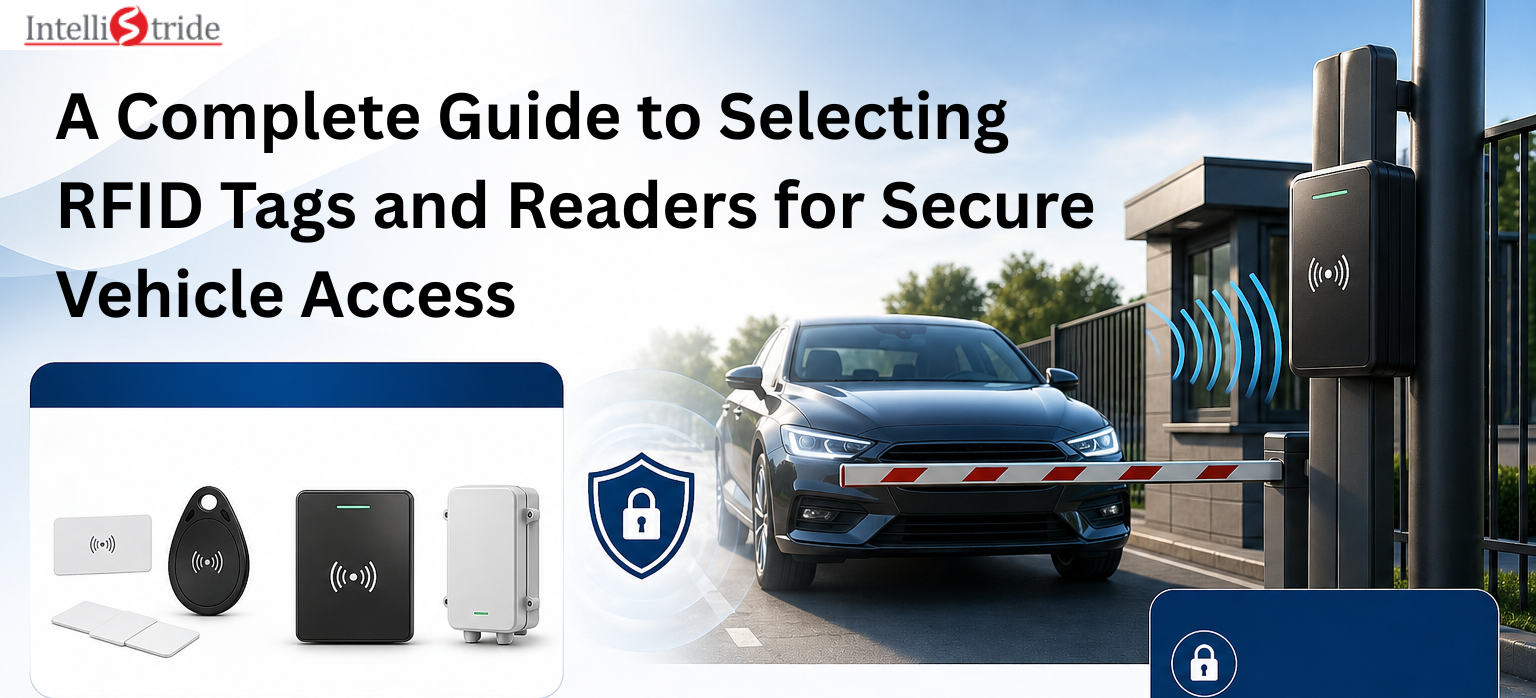
A Complete Guide to Selecting RFID Tags and Readers for Secure Vehicle Access
30 April 2026Introduction
With increasing concerns around security, automation, and efficiency, RFID (Radio Frequency Identification) technology has become a preferred solution for managing vehicle access in residential complexes, corporate campuses, parking facilities, and industrial sites.
Unlike traditional access systems, RFID enables contactless, fast, and secure identification, reducing human intervention and enhancing operational control. However, selecting the right RFID tags and readers is crucial to ensure optimal performance and security.
This guide will walk you through everything you need to know to choose the best RFID solution for secure vehicle access.
What is RFID Vehicle Access Control?
RFID vehicle access systems use radio waves to identify and authenticate vehicles equipped with RFID tags. The system typically includes:
- RFID tags attached to vehicles
- RFID readers installed at entry/exit points
- Antennas for signal transmission
- Software for access management
When a vehicle approaches the gate, the reader scans the tag and grants or denies access based on stored credentials.
Types of RFID Tags for Vehicle Access
Choosing the right RFID tag is critical for system efficiency and reliability.
1. Passive RFID Tags
- No internal power source
- Powered by the reader’s signal
- Cost-effective and widely used
- Suitable for short to medium range access
Best for: Residential complexes and office parking
2. Active RFID Tags
- Battery-powered
- Longer read range (up to 100 meters or more)
- Higher cost but better performance
Best for: Large industrial facilities and high-security zones
3. Semi-Passive (Battery-Assisted) Tags
- Combine features of passive and active tags
- Improved read reliability
- Moderate range and cost
Best for: Environments requiring higher accuracy than passive tags
4. Windshield RFID Tags
- Attached to the vehicle’s windshield
- Designed for automatic tolling and parking access
- Tamper-evident options available
Best for: Secure vehicle identification with minimal user interaction
Key Factors to Consider When Selecting RFID Tags
1. Read Range Requirements
Determine how far the reader should detect the tag:
- Short range (1–5 meters) → Passive tags
- Long range (10–100 meters) → Active tags
2. Frequency Type
RFID systems operate on different frequencies:
- LF (Low Frequency): Short range, less interference
- HF (High Frequency): Moderate range
- UHF (Ultra-High Frequency): Long range, faster data transfer
UHF is most commonly used for vehicle access systems.
3. Environmental Conditions
Consider where the system will be installed:
- Outdoor exposure (rain, heat, dust)
- Metal interference from vehicles
- Need for weather-resistant and durable tags
4. Security Features
For secure vehicle access, look for:
- Encrypted communication
- Tamper-proof tags
- Unique identification codes
5. Mounting and Placement
Tags should be:
- Easy to install
- Properly positioned for optimal readability
- Protected from damage
Types of RFID Readers for Vehicle Access
1. Fixed RFID Readers
- Installed at entry/exit gates
- Continuously scan for tags
- Ideal for automated access systems
2. Long-Range RFID Readers
- Detect tags from a distance
- Enable hands-free vehicle access
- Reduce congestion at entry points
3. Integrated RFID Readers
- Combine reader and antenna in one unit
- Easy to install and maintain
4. Mobile/Handheld Readers
- Used for manual verification
- Helpful for security personnel
Key Factors to Consider When Selecting RFID Readers
1. Read Accuracy and Speed
- Ensure quick and reliable detection
- Minimize missed reads or false triggers
2. Anti-Collision Capability
- Ability to read multiple tags simultaneously
- Essential for high-traffic areas
3. Integration with Existing Systems
- Compatibility with access control software
- Integration with CCTV, barriers, and databases
4. Connectivity Options
- Ethernet, Wi-Fi, or cellular connectivity
- Real-time data transmission
5. Durability and Weather Resistance
- IP-rated enclosures for outdoor use
System Design Considerations
1. Entry and Exit Layout
- Proper placement of readers and antennas
- Avoid blind spots and interference
2. Traffic Flow Management
- Ensure smooth vehicle movement
- Avoid bottlenecks
3. Access Control Policies
- Define user permissions
- Manage entry/exit logs
- Enable real-time monitoring
4. Data Security
- Protect stored and transmitted data
- Use secure servers and encryption protocols
Benefits of RFID-Based Vehicle Access Systems
- Contactless Operation: Faster and more convenient access
- Enhanced Security: Reduced unauthorized entry
- Automation: Minimal human intervention
- Scalability: Easily expand as needed
- Accurate Tracking: Real-time vehicle logs
Common Use Cases
Residential Complexes
- Secure entry for residents
- Visitor management
Corporate Offices
- Employee vehicle access control
- Parking management
Industrial Facilities
- Restricted access to sensitive areas
- Fleet monitoring
Toll Booths and Smart Parking
- Automated payments and entry
- Reduced waiting times
Challenges and How to Overcome Them
Interference Issues
- Use proper frequency and antenna placement
Tag Misreads
- Choose high-quality tags and readers
- Regular system calibration
Security Risks
- Implement encryption and authentication protocols
Initial Setup Costs
- Plan scalable deployment
- Focus on long-term ROI
Future Trends in RFID Vehicle Access
- Integration with IoT platforms
- AI-based access control and analytics
- Cloud-based management systems
- Mobile and app-based access credentials
Conclusion
Selecting the right RFID tags and readers is essential for building a secure and efficient vehicle access system. By understanding the different types, key features, and system requirements, businesses and residential communities can implement a solution that enhances security, improves convenience, and streamlines operations.
As technology continues to evolve, RFID systems will become even more intelligent, scalable, and integrated—making them a cornerstone of modern access control solutions.
- Intellistride.com
- Blog
- A Complete Guide to Selecting RFID Tags and Readers for…