
Blog on RFID Technology and IoT Solutions
Blog Home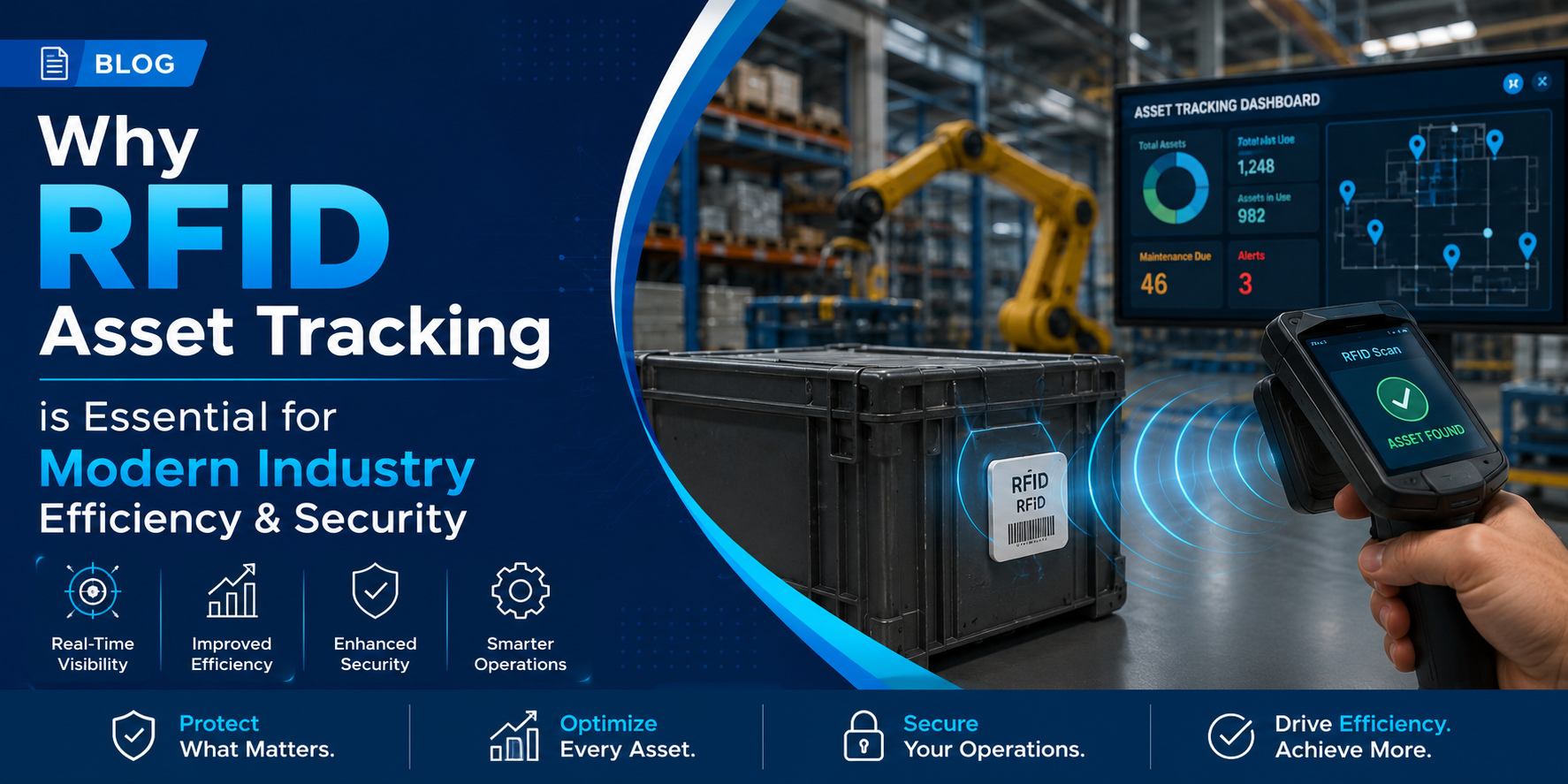
Why RFID Asset Tracking is Essential for Modern Industry Efficiency & Security
13 May 2026Introduction
In today’s fast-evolving industrial landscape, businesses are under constant pressure to improve efficiency, reduce operational costs, and enhance security. Managing assets—whether equipment, tools, inventory, or vehicles—has become increasingly complex, especially across multiple locations.
Traditional tracking methods such as manual logs or barcode systems often fall short in providing real-time visibility and accuracy. This is where RFID (Radio Frequency Identification) asset tracking emerges as a game-changing solution.
By enabling automated, real-time tracking of assets, RFID technology is helping industries streamline operations, minimize losses, and strengthen security like never before.
What is RFID Asset Tracking?
RFID asset tracking uses radio frequency technology to identify and monitor assets without requiring direct line-of-sight scanning.
A typical RFID system consists of:
- RFID tags attached to assets
- RFID readers to capture tag data
- Antennas for communication
- Software for data processing and analytics
When an asset with an RFID tag passes near a reader, its data is automatically captured and recorded in the system.
Why RFID Asset Tracking is Essential
1. Real-Time Asset Visibility
One of the biggest advantages of RFID is instant visibility.
- Track asset location in real time
- Monitor movement across facilities
- Access centralized dashboards
This eliminates guesswork and enables faster decision-making.
2. Enhanced Operational Efficiency
RFID automates asset tracking processes that were previously manual and time-consuming.
- Reduce manual data entry
- Speed up inventory audits
- Improve workflow efficiency
Employees can focus on more strategic tasks instead of routine tracking.
3. Improved Asset Utilization
Many organizations struggle with underutilized or misplaced assets.
RFID helps by:
- Identifying idle equipment
- Optimizing asset allocation
- Reducing unnecessary purchases
This ensures maximum return on investment (ROI).
4. Reduced Loss and Theft
Asset loss and theft can significantly impact business operations.
RFID enhances security through:
- Real-time tracking and alerts
- Geofencing capabilities
- Unauthorized movement detection
This provides better control over valuable assets.
5. Accurate Inventory Management
RFID improves inventory accuracy by eliminating human errors.
- Automated stock updates
- Faster inventory counts
- Reduced discrepancies
This leads to better supply chain management and planning.
6. Faster Audits and Compliance
Industries with strict regulations benefit greatly from RFID systems.
- Maintain accurate records
- Generate audit trails automatically
- Ensure compliance with industry standards
Audits that once took days can now be completed in hours.
7. Scalability and Flexibility
RFID systems can easily scale with business growth.
- Add new assets without complexity
- Expand across multiple locations
- Integrate with existing enterprise systems
This makes RFID a future-ready solution.
Key Industries Benefiting from RFID Asset Tracking
Manufacturing
- Track tools and machinery
- Monitor production assets
- Reduce downtime and delays
Healthcare
- Track medical equipment
- Improve patient safety
- Ensure equipment availability
Logistics and Supply Chain
- Monitor goods in transit
- Improve warehouse management
- Enhance delivery accuracy
Retail
- Optimize inventory management
- Prevent stockouts and overstocking
- Improve customer satisfaction
IT and Data Centers
- Track servers and hardware
- Manage asset lifecycle
- Enhance security
Security Advantages of RFID Asset Tracking
Security is a major concern for modern industries, and RFID offers several advantages:
- Encrypted Data Transmission for secure communication
- Access Control Integration for restricted asset handling
- Real-Time Alerts for suspicious activity
- Tamper-Proof Tags for sensitive assets
These features make RFID an essential tool for safeguarding valuable resources.
Challenges and Considerations
While RFID offers numerous benefits, organizations should consider:
- Initial implementation costs
- Integration with legacy systems
- Data privacy and cybersecurity concerns
- Environmental factors affecting signal performance
With proper planning and technology selection, these challenges can be effectively managed.
Future of RFID Asset Tracking
RFID technology continues to evolve with advancements such as:
- Integration with IoT platforms
- AI-driven analytics for smarter insights
- Cloud-based asset management systems
- Real-time location systems (RTLS)
These innovations will further enhance efficiency, automation, and security.
Conclusion
RFID asset tracking is no longer just an optional upgrade—it is a critical component of modern industrial operations. By providing real-time visibility, improving efficiency, reducing losses, and enhancing security, RFID empowers businesses to operate smarter and more effectively.
As industries continue to embrace digital transformation, RFID will play a central role in building intelligent, secure, and efficient asset management systems.
- Intellistride.com
- Blog
- Why RFID Asset Tracking is Essential for Modern Industry Efficiency…